

I have for several years been divesting books. Many have gone to good homes. The inspiration to declutter—a bit—came from an essay written in 1931 by German philosopher Walter Benjamin, who appraised the joy and challenge of a career with books in his essay: “Unpacking My Library.”
While unpacking my garden library, I found myself returning to Bobby Ward’s biography of J.C. Raulston, Chlorophyll in His Veins.
My small garden library holds decades of memories. There are books and journals that have been read and reread. Some weren’t worth keeping after a single reading. Others shame me because they are preserved but not read. (Caroline Dorman’s Natives Preferred may be read before the end of this year…)
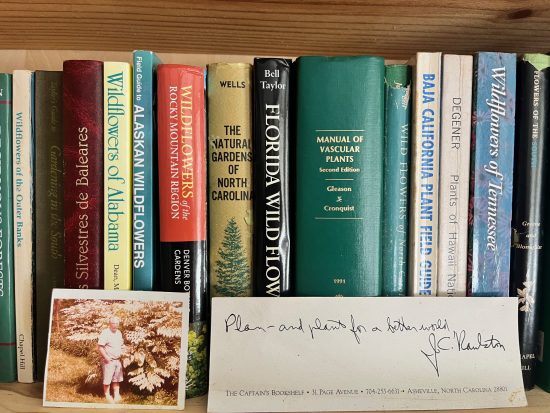
Fairchild, and Hinkley—the plant explorers—are there on my bookshelves. So are favorite garden writers—Jenks Farmer, Pamela Harper, Allen Lacy, Panayoti Kelaidis, Elizabeth Lawrence, and Christopher Lloyd.
Bobby Ward has unpacked J.C. Raulston’s (1940-1996) restless and remarkable life. First published in 2009, the revised and updated version of Chlorophyll in His Veins: J.C. Raulston, Horticultural Ambassador will be released later this month, including nearly 50 images featuring 25 color plates that had not appeared in the first edition.
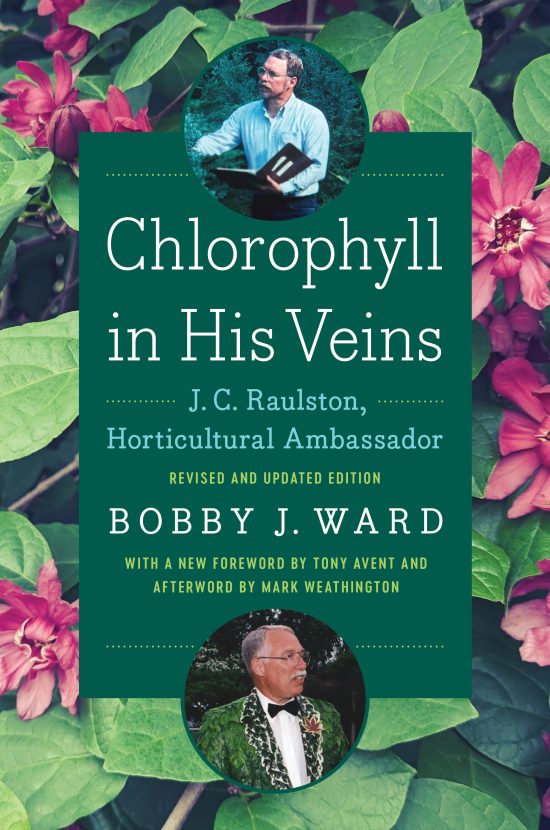
Ward’s excellent book will remain on my bookshelf. I cannot look at the first edition’s green binding without thinking about the call I got the morning after J.C. died in 1996. Ward knew J.C. and many of his friends.
J.C. Raulston was beloved
He was, as Joe Eck and Wayne Winterowd said, “the glue that held the horticultural community together. Nurseryman friend, Marion Redd, joked that J.C. could have been the lovechild of North Carolina writers Elizabeth Lawrence and William Lanier Hunt. Raulston possessed a will of his own.
James Chester Raulston was raised in small-town Lucid, Oklahoma, surrounded by a spare native landscape of red cedar, Osage orange, scrub oak, and cottonwood. His perfectionist father was an oil company mechanic who grew wheat and raised beef cattle on the side. His doting mother was a homemaker who encouraged her precocious only child to read and provided a “safe haven” in the family’s garden. J.C.’s fertile imagination was stoked. He had his first growing success at age eight with sweet peas.
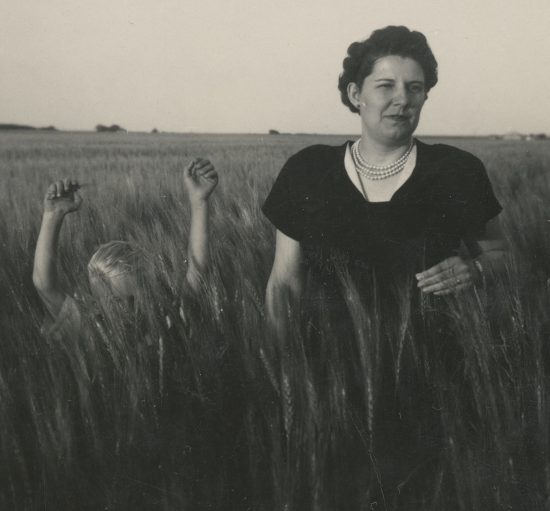
Age four with his mother in the family’s Oklahoma wheat field. Courtesy of J. C. Raulston Estate.
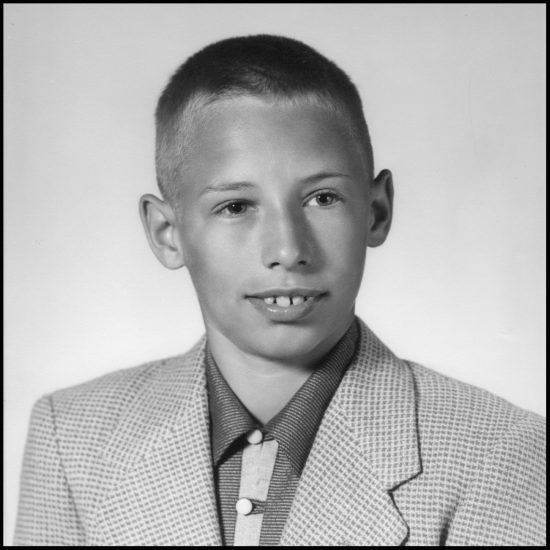
Age thirteen, eighth grade class photo. Courtesy of J. C. Raulston Estate
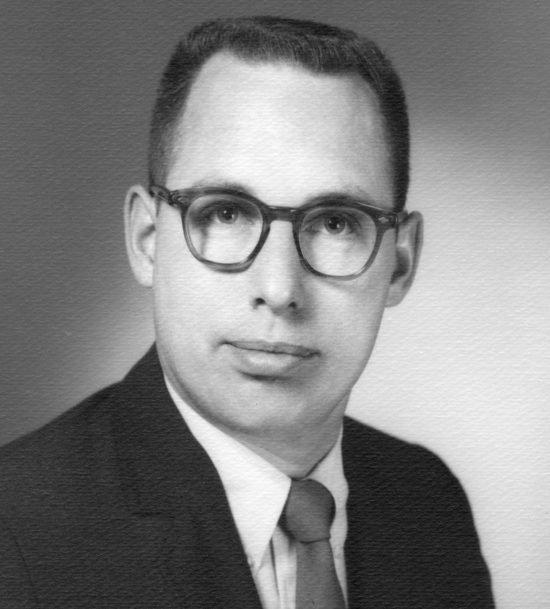
Age 28, graduate school, University of Maryland. Courtesy of the J.C. Raulston Estate.

University of Florida (1972.) Courtesy of J. C. Raulston Estate.
Professor Raulston directed students with far more than plants
Years later, in lectures, J.C. would mention Frances Hodgson’s The Secret Garden as a life-long influence. Others confided to J.C. that The Secret Garden had also been an early inspiration.
His students could be indulged with banana split parties and road trips to visit gardens and nurseries with unexpected stops. A roadside stand with fresh peaches or chili peppers was never passed up.
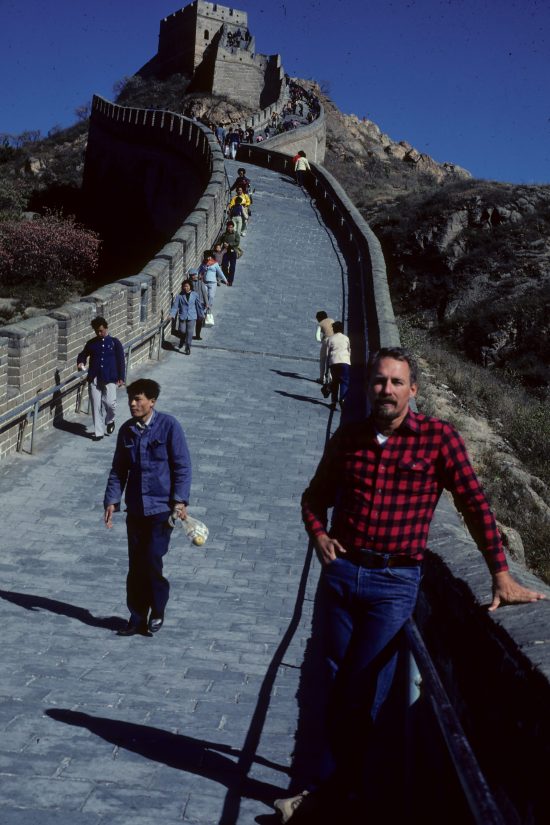
Great Wall of China (1981). Courtesy of JCRA Digital Collection at NCSU.
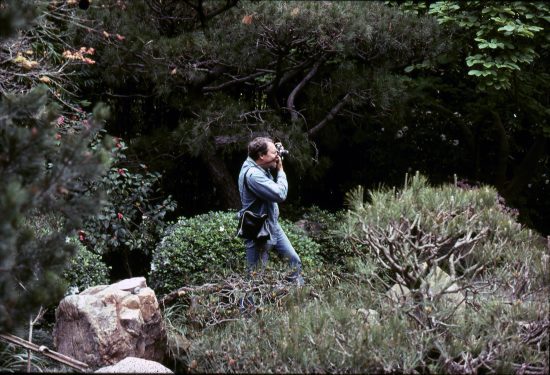
Photographing a garden in the U.K. (1988) Courtesy of Marion Redd
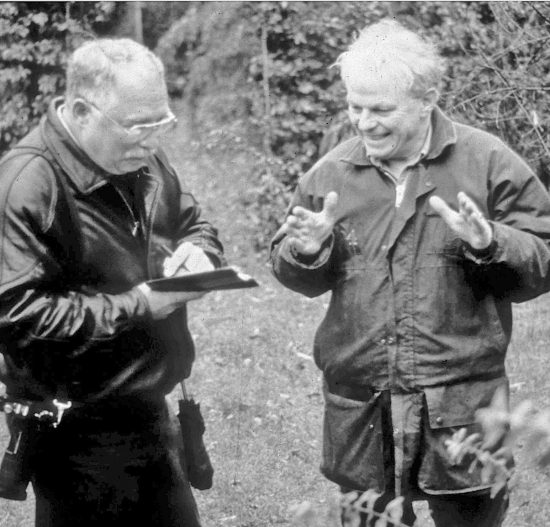
Meeting plantsman Roy Lancaster in the U.K. (1995). Courtesy of Darrin Duling
J.C. primed the pump with his own money
Begun in 1976, The North Carolina State University Arboretum in Raleigh, North Carolina, was restrained initially by faculty headwinds and a small budget. Naysayers said J.C. was an “idealist.” The eight-acre arboretum couldn’t survive, they said. A tiny, devoted staff and dozens of volunteers pressed on.
For years the Friends of the NCSU Arboretum Newsletter, often notoriously late, was essential reading. J.C prefaced each edition with an amusing apology for its tardiness. Topics covered his extensive and exhausting travels, thoughts, and news from the garden, concluding with his signature quote: Plan and Plant for a Better World.
J.C. was renowned for freely distributing new plants to plant growers. A few weeks before his death in December 1996, he sent his last connoisseur plant distribution list to arboretum friends and donors with a selection of 101 new plants. Each form letter was personalized with a handwritten note.
Renamed the J.C. Raulston Arboretum after his death, the garden remains a horticultural you-don’t-want-to miss-this destination.
There are several popular J.C lectures included in Chlorophyll in His Veins
“The Fifty Most Fascinating Plants I’ve Ever Met” was presented in 1993 to the Oklahoma Greenhouse Growers and Oklahoma Nurserymen’s associations. He speaks of plants he has encountered from childhood throughout his life.” These include Emotion/Memory Plants to Show/Spectacle Plants. “No gardener can possibly ever find & have every plant lusted after—but no one will ever stop trying either.”
“Joys of Horticultural Deviance: Tweaking the Solemnity of Mainstream Gardening” compares the ends of the spectrum, from those who spend little or nothing on their gardens to the hardcore who dig in without restraint. In a 1995 Seattle lecture to the North American Rock Garden Society, illustrating deviance, J.C. said, “Your group is truly deviant. You pile rocks up in piles when everybody else in gardening digs the rocks out and carries them away until their soil is stone free.”
J.C. would be proud
Tony Avent, a student of J.C.’s, who co-founded the popular Plant Delights Nursery, wrote a new foreword in this year’s revised edition of Chlorophyll. Avent has plans to turn over his Juniper Level Botanic Garden into a public garden in association with the J.C. Raulston Arboretum. The garden’s director, Mark Weathington, wrote a new afterword.
There are few North Americans who have left the indelible, horticultural (green) impression that J.C. Raulston did.
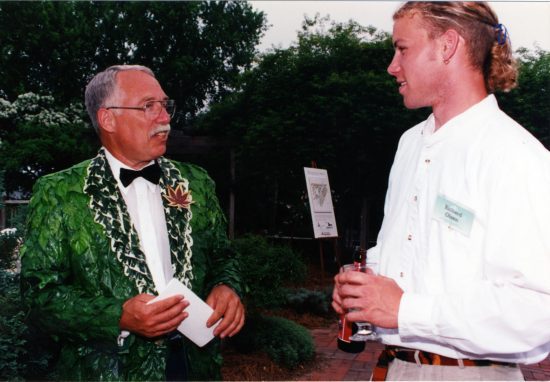
J.C. Raulston and former student Richard Olsen at the NCSU Arboretum Garden Gala (1996). Olsen is now the Director of the National Arboretum in Washington, D.C. Courtesy of JCRA Digital Collection at NCSU.
Set aside a few evenings for Chlorophyll in His Veins: J.C. Raulston, Horticultural Ambassador. Bobby Ward’s biography should be read by anyone with an interest in a charismatic, yet personally modest crusader who inspired a generation of ornamental plant growers and garden makers.
The book can be pre-ordered now with a 30% discount if purchased through UNC Press using this promo code at checkout: 01SOCIAL30. (See link below.) The book will be officially launched at the JC Raulston Arboretum on Thursday, April 9, 2026, at 6:30 p.m.



Thanks so much for this rant. It is wonderful to get to know these “names” of the plant world a little bit, even vicariously. I’ve still never been to the JC Raulston Arboretum (although it is on the itinerary for my planned East Coast garden tour, coming up soon !) and your introduction to the person behind the name will really add to the experience. Also makes me think about how good it is to have friends with whom to share a passion, whether amateur or professional — I need to get out there and make more gardening friends who are extreme as I am!
Thank you, Stephanie. You’re in good company. Enjoy your trip and the J.C. Raulston Arboretum.
Great article. We hosted JC in 1992 here in Louisville to speak and he was excellent. Absolutely one of the best speakers and I have heard many !
Thanks, M.A. I didn’t return to Louisville until 1995 and think he spoke in 1996. It’s possible that Helen Harrigan was in the audience, and because of her generous bequest in support of a garden, we now have the Waterfront Botanic Garden.
I’m ordering right now. Thank you so much for this rant. Keeping my connection to North Carolina, and the fountain of friends, knowledge, and inspiration there, are important to me way down here in Jackson MS. That is Home to my gardening heart. Bobby’s new book will be a tether.
Good for you, Mary Jane. I know you’ll enjoy Bobby’s book.
Learning from Dr. Raulston as a student of Horticultural Science at NC State was a privilege and a gift. I read my copy of “Chlorophyll in His Veins” while sitting in the UNC Hospital off Blue Ridge Road a stone’s throw from the J.C. Raulston Arboretum) as my daughter, a senior at State, tried her darndest to get well. The irony of how life circles around and how deeply all felt his death was not lost on me at that time. He was dear and a brilliant plantsman.
Clara, you probably know the story about J.C. showing up for a dinner talk to the Horticultrual Crops Commission? I believe it was at the Western Sizzler on Merrimon. J.C. spoke sometime in the early 1990s and said Western North Carolina needed an arboretum. I believe this was the spark that led to the beautiful Nort Carolina Arboretum.
Hey there Allen, I never would have met you, Clara or Mary Jane or the army of horticulturalists, botanists, nursery men and women, landscape architects and designers if I hadn’t met JC Raulston as a senior student in the horticulture department at NCSU. Volunteering at the now JCRA was crucial to advancing so much in my life not to mention my design business ‘Landscape Planning for Do-It-Yourselfers”. JC Raulston’s name is still known around the world. So, If you are ever in a public garden be sure to mention his name and I guarantee you’ll be treated to another lifelong admirer of JC. THANK YOU for this great Rant.
Yes, indeed, Suzanne. There was a lot of interconnectedness that passed through J.C. We were all lucky for that. Thank you for your contribution to the JCRA!
I am eternally jealous of the many hort friends I have “of a certain age” that had the great fortune to be his friend and/or student. Still, at least I can feel his influence radiating from them and I am a receptacle for that passion. Don’t gasp and think little of me, old friend, when I tell you that I have not read the book, but I do promise I am ordering as soon as I hit the period at the end of this sentence.
Carol, I understand “of a certain age.” I also know we’re a generation removed from J.C.’s barnstorming travels and talks. You will enjoy Bobby’s book. I hope other young horticulturists will pick it up and be inspired also.
Many thanks for your writing and for this sweet visit to J.C.+++ He was a real force of nature and horticulture- I remember his talk at Cullowhee called “The Importance of Provenance” or similar. He really was a brilliant educator- and good humor- and also liked wild outfits… I vaguely remember a bright green suit….
Dale, I also remember a provenance talk at Cullowhee on native North American plants in English gardens.
Funny Carol recalls J.C. showing up with Kudzu leaves all over his outfit….
I remember him giving talks at Kilgore Hall. As a young mother, I wanted to take his pm hort class in the spring. There was a 3:00 lab that went with it.i asked if I could still take the class without the lab. He said, “Of course, but we’ll miss you!” Always gratious.
Sadly he died that year and I never took the class.
Ellen, what a bittersweet memory.
The point that seems to be missing from most discussions of Raulston’s life is that, the night he fell asleep at the wheel and collided with another car, the young driver of the other car was killed. The young man hadn’t lived long enough to have the rel own of Raulston, but both lives deserve to be remembered.
Erin, author Bobby Ward does not spare words on the very sad and tragic death of the young man.