

An apology:
I went on a proper holiday (a week!) for the first time in many years, and it’s left me short of time to write a post for you. But on that holiday we did visit one of the Royal Horticultural Gardens and I can tell you about that. Sorry for American readers that it’s in England.
I need to start by exploring just what a garden like Rosemoor means to me. I’ve spent a long time trying to make sense of my responses to gardens like this, which do, after all, seem to be the very peak of model star gardens to most of the gardening public. But they do tend to leave me a little cold, even in a heatwave. And there was a heatwave.
Here’s a clue, from The History of RHS Garden Rosemoor:
“Filled with an astounding collection of plants including rhododendrons, camellias, roses, and champion trees, a series of garden areas leads visitors from one joyous area to the next.”
This garden is unashamedly a plant collection. And that becomes clear as you arrive.
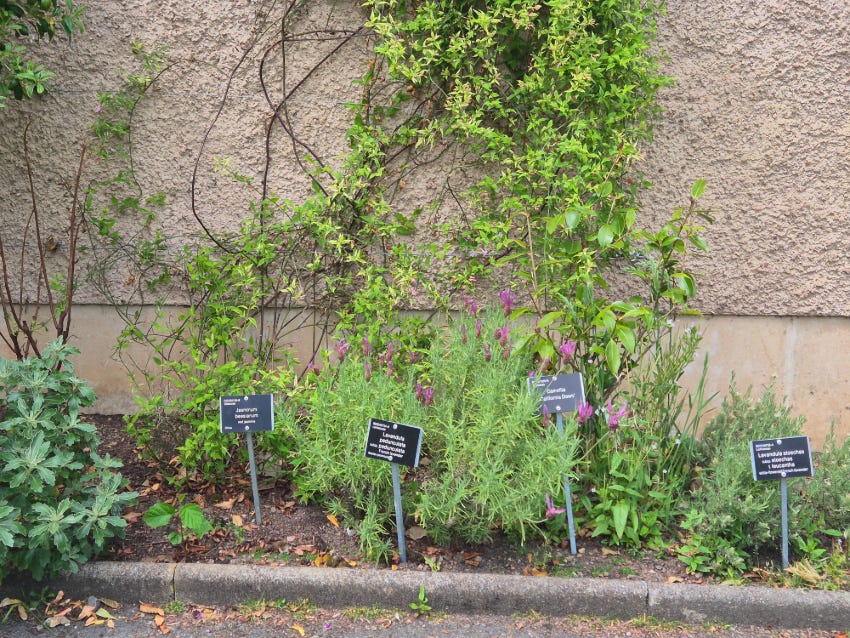
Labels
Though visitors should be warned that labelling is always totally problematic in a garden and you need to check carefully before purchasing something you fell in love with. I found many misleading labels due to the season or perhaps sudden deaths. Hopefully AI will kill these eyesores one day, but I don’t expect it soon.
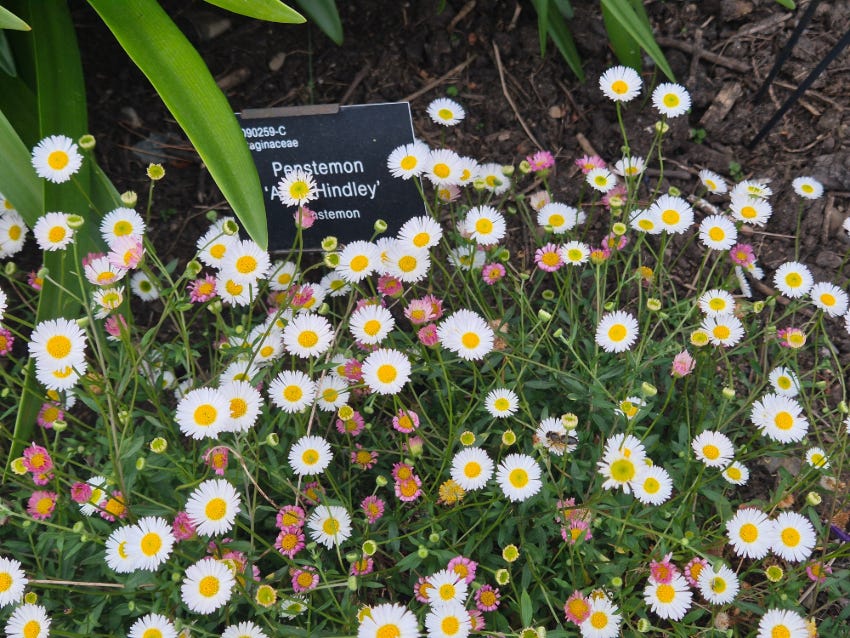
No, it’s not.
Sometimes it’s just a bit funny:
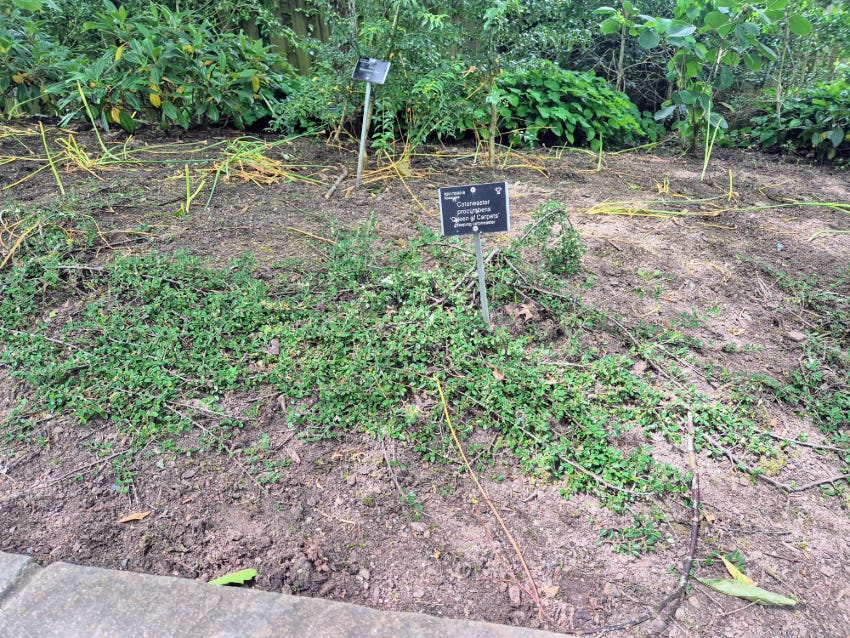
It says Cotoneaster procumbens ‘Queen of Carpets’. One day, maybe….
It’s intended to be educational:

And although it was once a person’s (a plant collector..) own garden, it has been expanded far beyond that original site. (See history) Rather like that other famous garden, Wildside, it has been dramatically shaped with earth moving machines:
“More than 13,000 tonnes of soil were removed from the new entrance area and car park, and redistributed in the Formal Garden area to level off the site.”
So it cannot be thought of as a response to its site or to a sense of place. I don’t think it aims to be beautiful or exciting. Which is what I look for in a garden. Along with seats.
But I believe it is offering what the majority of garden visitors expect and enjoy, and that probably applies to readers of this post too?
Here’s the Plan:

It’s big. Happily it does have lots of seats. And two cafes. Good cream teas.
We started, after odd pauses and sits =
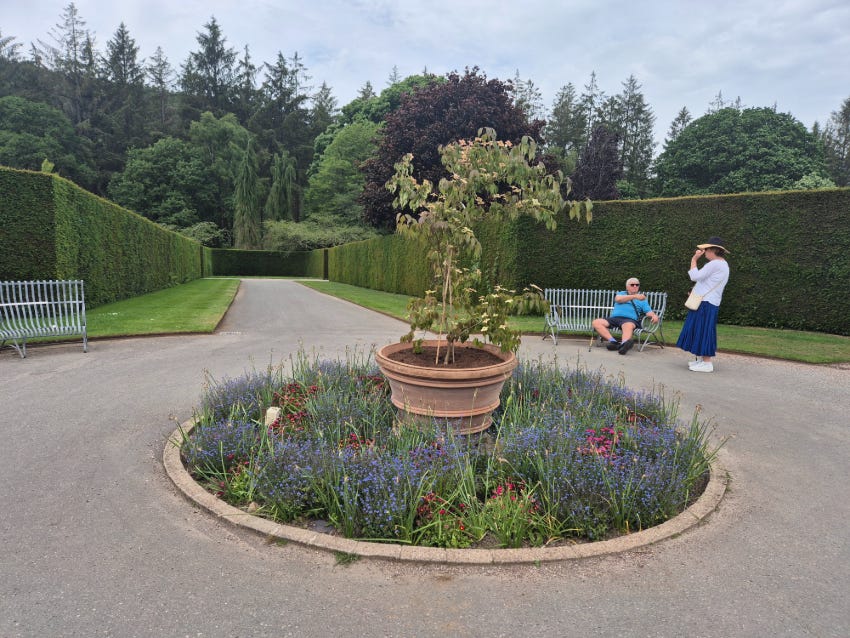
That’s not us. We were on the seat opposite admiring the somethings.
at the Queen Mother’s Rose Garden, with lots of labelled roses – good if you’re wanting to see roses in the flesh. I think there’s another rose garden too, for shrub roses – this may be that one.

Then there are Model Gardens, which I confess we didn’t seem able to make much sense of.
Let’s consider a garden we did like. Charles especially:

Charles enjoyed the use of water and the plant selection. The paths are wheelchair wide, but none the worse for it.
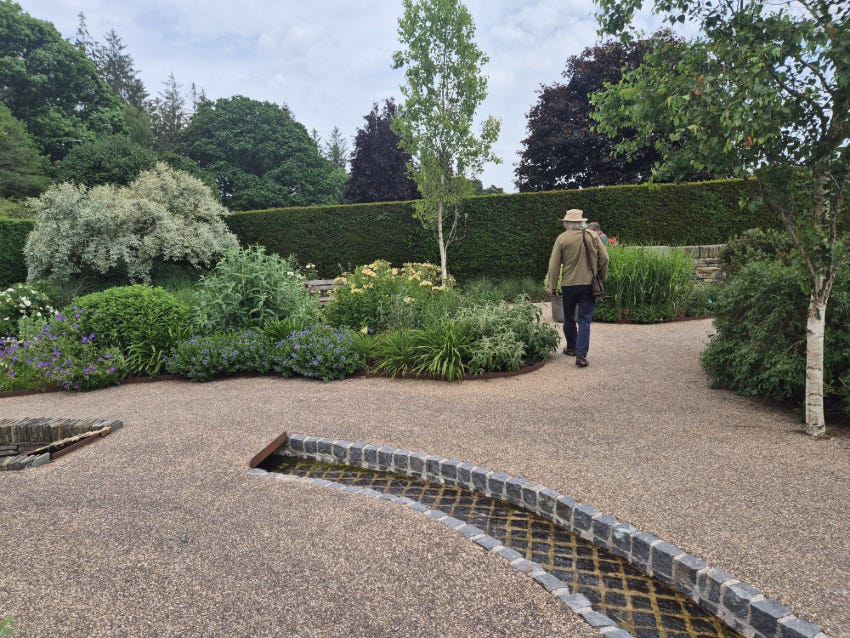
There he is.


Outside that garden there’s lots of this kind of thing:

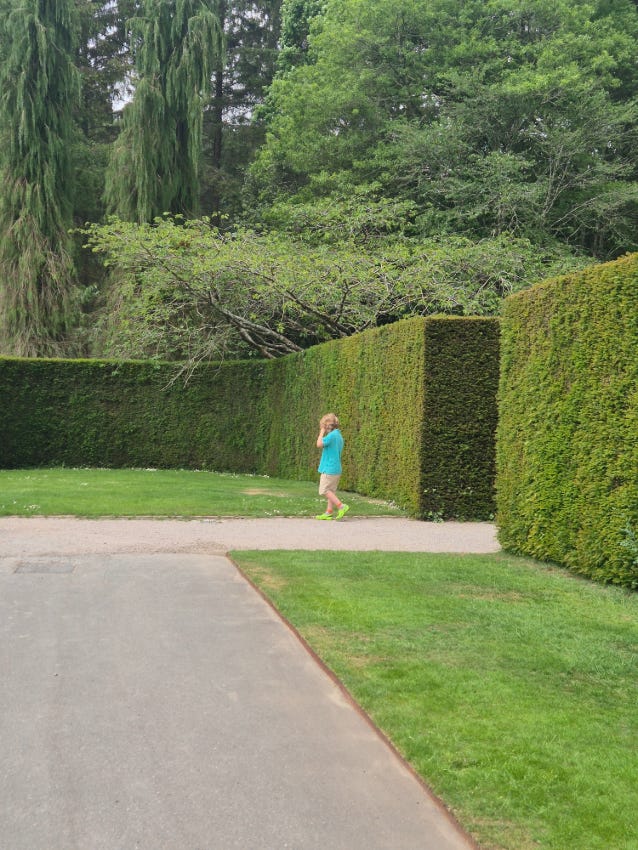
And a sad child?
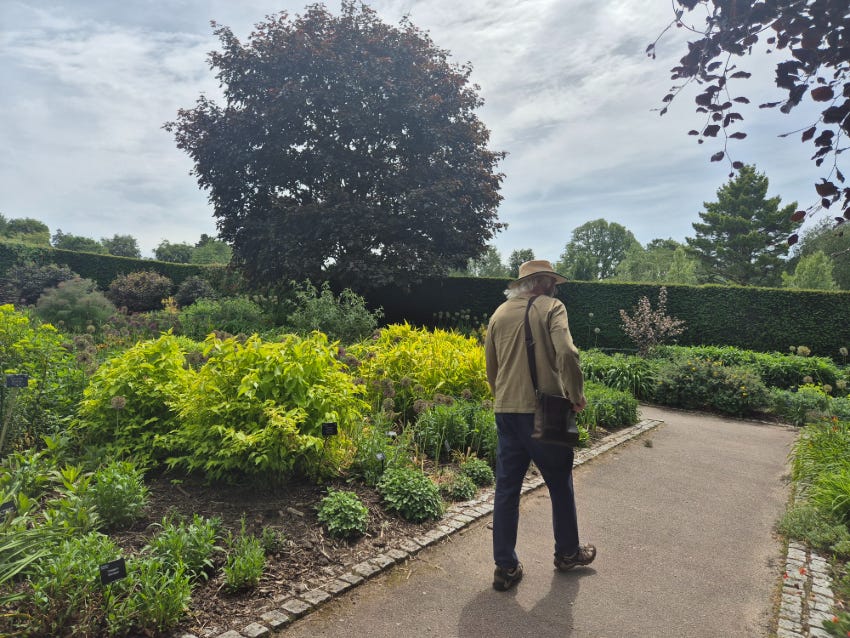
And bare soil. I hate bare soil.
There’s a Hot Garden looking not so hot. I guess if you make gardens with bulldozers you then have to invent notions about what you install on the site. And it’s good if everyone’s heard of ‘Hot Gardens,’ ‘Cottage Gardens’ and the like.
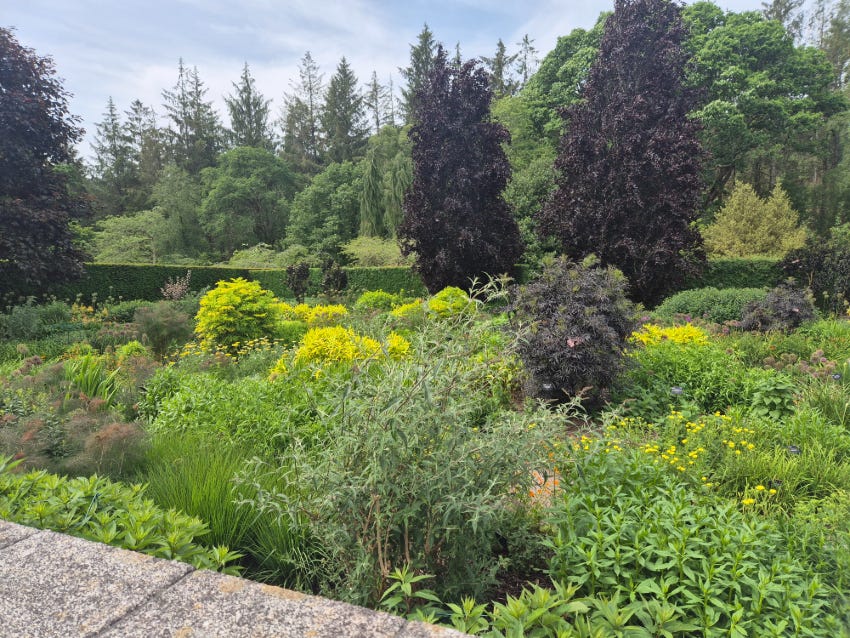
Hot Garden, playing it cool…
I think this is from the inevitable Cottage Garden:

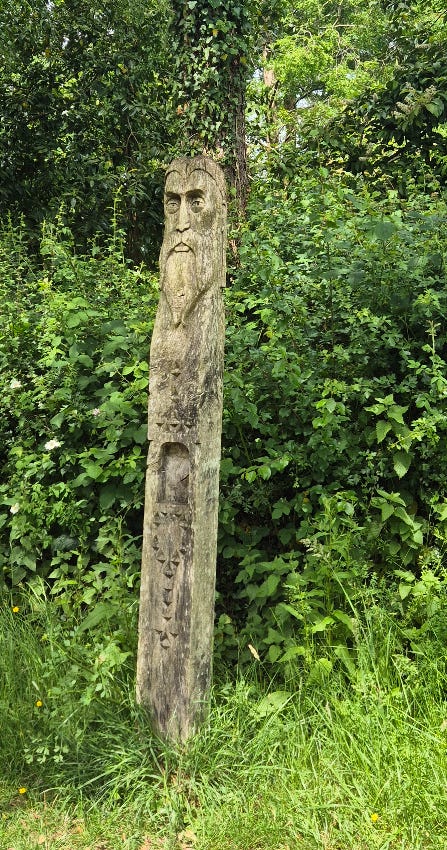
Noooo….. horrible!
There’s a meadow, looking very tidy, flat and new and not a bit like the older version at Veddw: (reassuring if you want to make a new one yourself. Maybe it takes a few lifetimes to look really rough) Rosemoor has some great orchids.

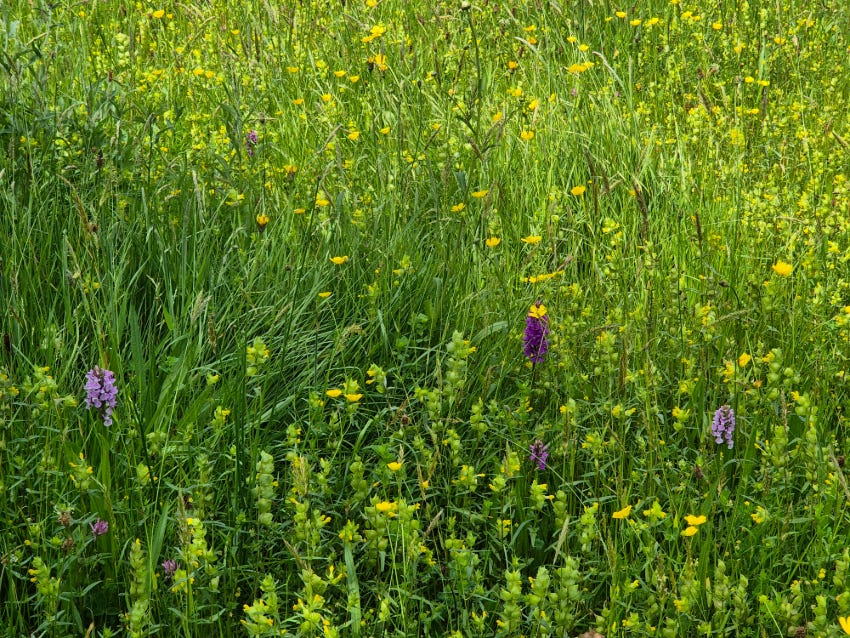
Orchids and much yellow rattle
Labelling at its worst:

Can’t we perhaps be happy with one good plant in a pot?

OK – what about the things we liked??!! (About time) I must have liked some things because Charles caught me smiling:

So, pleasures: here, a delight by the cafe:
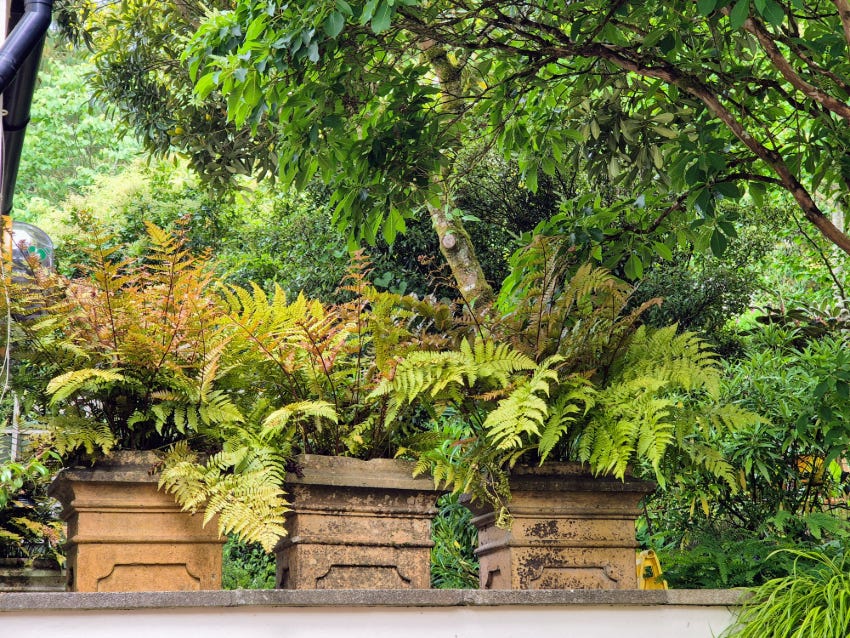
Three beautiful ferns, grouped together. Lovely. Dryopteris erythorosa Brilliance, I think. Worth eating a cream tea in order to enjoy that sight.
Some pillars. I think I like them. Or are they just a bit pointless?

But the place we both loved was the Rock Gully, by the Underpass:


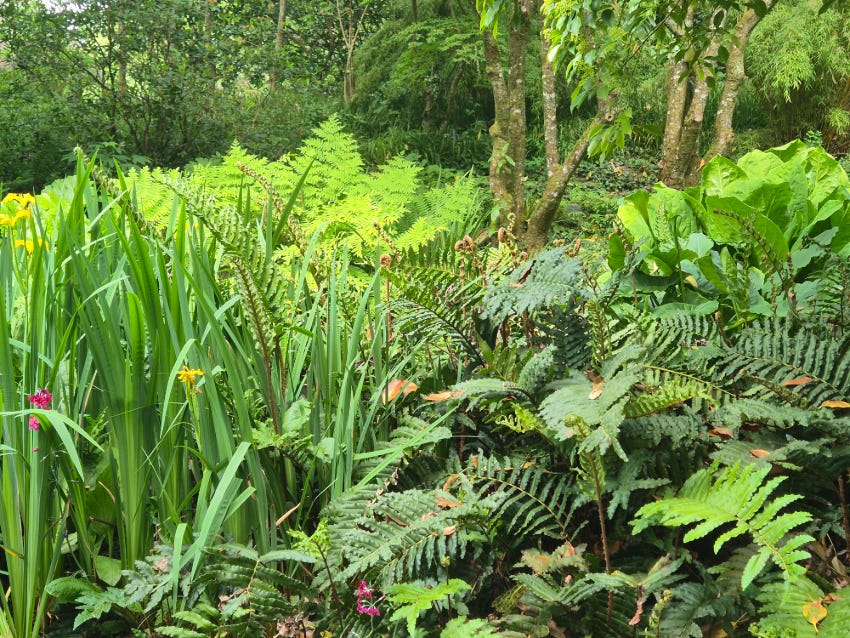
Cool, soothing, and beautifully planted.
And nearby a tremendous plant:


I think we enjoyed our visit. If you want to discover labelled plants you will be happier here than in a nursery, as you can see them planted in ideal conditions and often in full growth rather than in pots. There are seats and cream teas: what’s not to love?


Leave it to Anne to find endless irritations, shortcomings, and an occasional begrudging compliment or two. And always the obligatory comparison to her own garden.
Thank you, Eric – I’d hate to let you down. So good to know you read every word I write on here. Here’s the Veddw website in case you’d like to know more https://veddw.com/.
Looking forward to your thoughts on my next post.
I have mixed feelings about labels. They look annoying, especially when dotted about in a gravel garden. On the other hand, I’m always wanting to know what things are, and don’t find the plant apps all that reliable. In my own garden, I struggle each spring to remember what I put where, particularly during a long, cold spell (not unusual for Connecticut) when plants are growing grudgingly, if at all. I haven’t put labels in, but maybe I should. At my age, my memory is unlikely to improve.
I hate labels because they’re ugly – and what is a garden doing being ugly?
Well, being a plant collection, is what. I’m on a loser, I know. But even if someone managed to make labels accurate I’d still hate them.
Sorry – most people are with you and want to know what the plants are.
There are many reasons to visit a public garden. When visiting RHS Wisley, I was grateful for plant labels and found it helpful to photograph each plant with its associated label to aid my memory and for educational purposes.
RHS Wisley contained many plants that I had never viewed in person as gardener from Pennsylvania. On the other hand, I love to visit gardens to enjoy an immersive experience or their unique design and plant combinations example: Longstock Water Gardens in the UK or Chanticleer near Philadelphia, PA.).
A former neighbor collected Hostas and had professionally engraved signs made for each one of his 175+ species of Hosta. He grouped his plants in various “themed areas” and entertained visitors with stories about each group based on the species name. It was amusing to tour this garden with wine glass in hand and listen to tales of the cocktail garden containing H. ‘corkscrew’, H. ‘appletini’, etc. or the “beach garden” with H. ‘Bikini’ and others.
Each garden visit is unique and my goal is always to learn something new or just enjoy a day outdoors. A home gardener from Pittsburgh, PA, USA
Perhaps this is a beginning – in defining the different characteristics of a garden so we know what to expect before we take an expensive trip. It’s not good enough to simply regard and name a garden as lovely……
Interesting visit and post Anne. Congrats on taking a bit of a vacation. I have heard of Rosemoor but don’t know much about it. Always a debate about signage but it’s a bit disconcerting to have each garden area explained to you prior to entering. Seems to me it would take away from the emotional response one gets when entering a new space. Loved the rock gully though, the immersive feel of it and how unpredictable it is.
I think they believe a garden is primarily for education. It would be interesting to know what the brief was for the garden designers – and how the designers then feel about the result, with labels!
I reread Lady Anne Palmer’s honest, hands in the soil account of Rosemoor inherited, planned and tended to by her in The Englishwomen’s Garden. Reading your recent opinions of the garden, I totally agree. I can’t help but conclude that once a garden changes hands and is given over to an “institution” the wheels are in motion to reconfigure the quaint, personal, intimate spaces into a public spectacle where “they” feel labels are the guiding light we need when visiting a garden. Beauty or education? Get a book, do your homework, that’s where the education should be. We should not be distracted by labels when absorbing the aspects of the plants themselves, their companions and habitat. That intake alone should teach us enough to take home. Sometimes I’ve made sketches of the questionable plant and that seems to help.
An excellent point.
I’m anti-label, myself. I want to feel the space, be surprised, try to figure out what’s intended, look for contrasts, think, and then go back to feeling and wondering how that feeling was engendered. Labels are an ugly distraction.
But for people who want plant names, I doubt labels in situ hare the only way to deliver the info. Everyone’s online now; there must be another way…
As for the pillars, I like them. Sophistry, but perhaps the pointlessness is the point
I think you’re as likely to get an accurate identification from an app as a label. Discreetly.
Pillars – don’t you think pointlessness is a bit sophisticated for the RHS?
No one can argue with a good cream tea or a nice place to sit. I am with you on signage. I’d prefer public gardens use a phone app or at least be less cluttered than what you showed. Lurie Garden in Chicago does labels right by not doing them. They have tasteful placards with plant photos/names set off from the main view.
So, it can be done. Sensitivity!
Love the snark; agree with both likes and dislikes. Down with poor, ugly, often misleading labelling! putting them in pots seems to be the most egregious.
True! It gets ridiculous.